How Many Yards of Gravel Do I Need?
Length times width times depth, divided by 27, plus a little extra: the whole job takes about two minutes and a tape measure.
October 7, 2026 · 4 min read
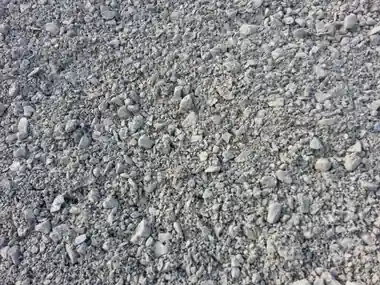
Most people who call us about gravel start with the same question, and most of them already have the answer in their head without knowing it. Gravel is sold by the cubic yard. A cubic yard is a block of material three feet long, three feet wide and three feet tall, which works out to 27 cubic feet. Once you know how many cubic feet your project needs, you divide by 27 and you have your yards.
The formula
Measure the length and width of the area in feet. Decide how deep you want the gravel in inches, then divide that by 12 to get feet. Multiply the three numbers together to get cubic feet, then divide by 27. Written out, it's length x width x depth in feet, divided by 27.
A few measuring tips help. For a rectangle, just multiply. For a curved path, measure the length down the middle and use an average width. For an odd shape, break it into rectangles, work each one out and add them up. If the ground is uneven, measure the depth in a few spots and use the average. A tape measure and a notepad are all you need, and it's worth doing this at the site instead of guessing from the kitchen window.
Typical depths
Depth is where people most often guess wrong. These are common starting points, not rules, and your site may call for something different:
- Decorative rock over a bed or path: about 2 to 3 inches, so the ground and the fabric don't show through.
- A walking path or patio base: often 3 to 4 inches, packed down.
- A driveway or parking pad: most people go with 4 to 6 inches, and more where the ground is soft or the traffic is heavy.
- Drainage around a pipe or footing: the depth of the trench itself, so measure the trench.
Three worked examples
A driveway strip, 20 feet long and 10 feet wide, with 4 inches of 3/4 minus. Four inches is one third of a foot, so 20 x 10 x 0.33 comes to about 66.7 cubic feet. Divided by 27, that's about 2.5 yards.
A garden path, 40 feet long and 3 feet wide, with 3 inches of rock. Three inches is a quarter of a foot, so 40 x 3 x 0.25 is 30 cubic feet. Divided by 27, that's a little over 1 yard.
A parking pad, 12 feet by 30 feet, at 6 inches deep. Six inches is half a foot, so 12 x 30 x 0.5 is 180 cubic feet. Divided by 27, that's about 6.7 yards.
Add a little extra
Gravel settles and packs once you drive on it or run a compactor over it, so a layer that looks right on day one can end up thinner a month later. Most people add about 10 percent to their number, and a bit more for a long driveway. Coming up short is usually more annoying than having a half yard left over, because a second small delivery means scheduling the whole thing again. Spare gravel is easy to put to use. It fills low spots and ruts later in the season.
Trucks, tons and full loads
Our truck can haul up to 12 yards of rock or 15 tons. Both numbers matter because gravel is heavy, and the weight per yard changes with the rock and with how wet it is. Many crushed rocks run somewhere around 1.2 to 1.5 tons per cubic yard, so a truck can reach its weight limit at about the same point it runs out of room. If you're not sure what your material weighs, ask us when you call.
We offer a discount on full dump truck loads of certain gravels. Those are 1 1/2 basalt chips, 2 to 4 inch shale, 3/4 clean chips, 1 1/2 drain rock, 3/4 minus driveway gravel and 1 1/4 minus driveway gravel. If your math lands near 10 yards or more of one of those, it's worth asking about a full load.
To show the size of the gap, here are prices from the yard's online store in October 2026, which may change. 3/4 minus is listed at $51.00 per yard. The full load of 12 yards, delivery only, is listed at $294.00. Twelve single yards at the per-yard price would come to $612.00, though you'd want to ask what delivery adds for your address, because the delivery charge is based on the round trip mileage from our location.
Your site matters too. We can spread a load as long as the truck can maneuver in the area, the area is clear of overhead power lines and the ground is level. If your driveway runs under a line or on a slope, tell us when you order so we can work out where the pile should go.
If you'd like a second opinion on your numbers, call the yard at (509) 469-3836 or stop by 31 W Washington Ave in Yakima. Bring your measurements and a photo of the area, and we'll help you pick the rock and round the number sensibly. From November through mid-March the yard runs on appointments, so call before you drive out.
Soracco Landscaping Materials, (509) 469-3836
Call (509) 469-3836More articles
Short-Load Concrete: When a Trailer or a 3 1/2 Yard Truck Makes More Sense Than a Full Mixer
A walkway, a pad or a set of footings often needs one or two yards, and there are two ways to get that from us.
Choosing Decorative Rock for a Yakima Yard: Montana Rainbow, China White, Champagne, Red Lava and Yellow Pathway
Five decorative rocks from our bins, how they differ and how to lay any of them so the bed still looks good in five years.