Topsoil, Compost or Potting Soil: What to Put in a New Garden Bed
They aren't interchangeable, and knowing which one does which job saves you money and a second trip.
October 7, 2026 · 3 min read
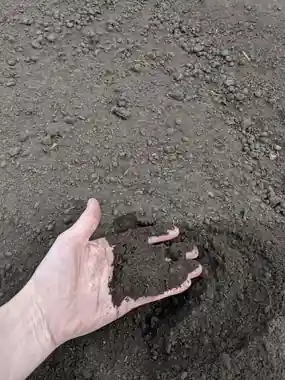
A new garden bed is mostly a soil question. The plants are the fun part, but what goes under them decides whether they thrive. At our yard you'll find topsoil, compost, potting soil and mulch, and each does a different job.
Topsoil: screened or unscreened
Topsoil is the bulk of a bed. Screened topsoil has been run through a screen to take out rocks, clods and large debris, so it's finer and easier to rake smooth. Unscreened soil comes as it is, usually with more rock and lumps in it. From the yard's online store in October 2026, and subject to change, unscreened topsoil is $30.00 per yard and screened is $35.00 per yard. For fill or a rough lawn base, unscreened can be the sensible pick. For a garden bed, or anywhere you'll plant by hand, screened tends to be worth the extra five dollars a yard.
Kae put it this way in a Google review: "Ordered 28 yards of screened top soil, it was delivered in two days." A truck holds up to 12 yards, so a big order like that arrives in more than one load, and Kae noted that "they even gave us some extra time to get moving the first load before coming back with the second." If you have a tight driveway, tell us when you order.
Compost: the improvement
Compost isn't a replacement for topsoil. It's the ingredient that feeds the soil and improves its texture. Many soils in dry climates are low in organic matter, so most beds benefit from some. A common starting point is to blend compost into the top 4 to 6 inches of topsoil, roughly one part compost to two or three parts soil, then adjust from there. In the October 2026 store listing, compost is $75.00 per yard, more than twice the price of screened topsoil, which is a good reason to mix it in rather than fill a bed with it.
We also carry Composted Steer Fertilizer, described on our page as "Beautifully composted Organic Steer Fertilizer." Emily Case wrote that she got soil from us for her garden: "It was wonderful soil and had an amazing garden!" Good soil, built up season after season, is usually what that kind of result comes from.
Potting soil is for pots
Problend Potting Soil is listed on our page as the best potting soil we have: "30% Peat moss, mycorrhizae, 3 Organic Fertilizers, Perlite and More." Peat and perlite typically keep a mix light and airy, which is what a container needs, since roots in a pot have nowhere else to go. Mycorrhizae are beneficial fungi that partner with plant roots. Garden topsoil in a pot tends to pack down and drain poorly, which is why potting mixes exist.
In the October 2026 store listing, Pro Blend potting soil is $100.00 per yard, which is nearly three times the price of screened topsoil. That makes it a good fit for containers, raised bed top-offs and seed starting, and a poor fit for filling a 20 foot bed.
Mulch goes on top
Mulch goes on the surface after planting. Our 1/2 inch Red Fir Mulch is described this way: "This Product is Great for Mulching, adding nutrients and Organics to your soil." We also carry Medium Bark at 1 1/2 inches and Small Bark nuggets at 3/4 inch. A 2 to 3 inch layer is typical, kept an inch or two back from stems and trunks so bark isn't piled against them. A layer of mulch helps hold moisture through a Yakima summer and slows weeds.
How much to order
Use the same formula as gravel: length x width x depth in feet, divided by 27. A 4 by 8 foot raised bed filled 12 inches deep is 32 cubic feet, just under 1 1/4 yards. For an in-ground bed where you're adding 6 inches of topsoil, a 10 by 10 foot bed is 50 cubic feet, a little under 2 yards. Order a bit extra, because soil settles after the first few waterings and a bed that looks full on Saturday can sink by the next weekend.
A simple recipe for most new beds is screened topsoil as the base, compost blended in, plants set in, then mulch on top. Potting soil stays in the containers. If you'd like to see the soil before you commit, or talk through how much your bed needs, stop by 31 W Washington Ave in Yakima or call (509) 469-3836. From November through mid-March the yard runs on appointments, so call before you drive out.
Soracco Landscaping Materials, (509) 469-3836
Call (509) 469-3836More articles
How Many Yards of Gravel Do I Need?
Length times width times depth, divided by 27, plus a little extra: the whole job takes about two minutes and a tape measure.
Short-Load Concrete: When a Trailer or a 3 1/2 Yard Truck Makes More Sense Than a Full Mixer
A walkway, a pad or a set of footings often needs one or two yards, and there are two ways to get that from us.